
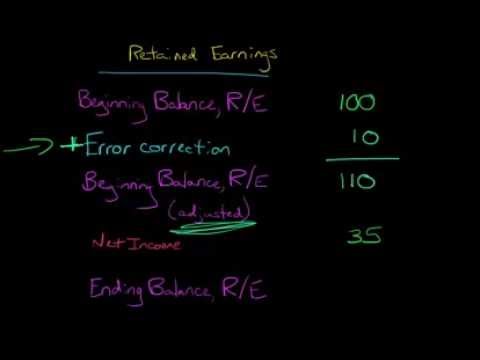
The only difference is that accounts receivable and accounts payable balances would not be factored into the formula, since neither are used in cash accounting. To calculate retained earnings add net income to or subtract any net losses from beginning bookkeeping retained earnings and subtracting any dividends paid to shareholders. Retained Earnings are the portion of a business’s profits that are not given out as dividends to shareholders but instead reserved for reinvestment back into the business.
Retained Earnings
It hires, and maybe fires, the top executive and oversees company operations during quarterly or monthly meetings. The board retains authority over dividends and financing issues that affect shareholder interests. This group presumably guarantees that the company employs its assets for the shareowners’ benefit without concern for the personal gain of employees and management.
Less mature companies need to retain more profit in shareholder’s equity for stability. On the balance sheet, companies strive to maintain at least a positive shareholder’s equity balance for solvency reporting. If retained earnings are generated from an individual reporting period, they are carried https://www.grupovalei.com/how-do-dividends-affect-the-balance-sheet/ over to the balance sheet and increase the value of shareholder’s equity on the balance sheet overall. The basic accounting equation for a business is assets equal liabilities plus the owner’s equity; simply turned around, this means the owner’s equity equals assets minus liabilities.

Additional Paid In Capital (APIC) is the value of share capital above its stated par value and is listed under Shareholders’ Equity on the balance sheet. Net Income is a key line item, not only in the income statement, but in all three core financial statements. While it is arrived at through the income statement, the net profit is also used in both the balance sheet and the cash flow statement. Retained earnings are listed on a company’s balance sheet under the equity section. A balance sheet provides a quick snapshot of a company’s assets, liabilities, and equity at a specific point in time.
They assume that they’re using their shareholders’ resources efficiently if the company’s performance—especially ROE and earnings per share—is good and if the shareholders don’t rebel. They assume that the stock market automatically penalizes any corporation that invests its resources poorly. So companies investing well grow, enriching themselves and shareholders alike, and ensure competitiveness; companies investing poorly shrink, resulting, perhaps, in the replacement of management. In short, stock market performance and the company’s financial performance are inexorably linked.
How Net Income Impacts Retained Earnings
Small companies with only a few owners may substitute withdrawals by owners for formal dividend declaration. However, for accounting purposes, these withdrawals are identical to stockholder dividends. The amount of withdrawals is subtracted from retained earnings the accumulated retained earnings balance, just like dividends are. Retained earnings differ from revenue because they are derived from net income on the income statement and contribute to book value (shareholder’s equity) on the balance sheet.
As with our savings account, we’d take our account balance for the period, add in salary and wages, and subtract bills paid. A quick way to remember that retained earnings are found on the balance sheet is to think about the fundamental differences between the balance sheet and the income statement.
End Of Period Retained Earnings
- This figure is accounted for in the “Shareholder’s Equity” section of the balance sheet, which is where you’ll find retained earnings.
- A company’s balance sheet shows the company’s net worth, which is a measure of its assets less its liabilities.
- If a company starts the year with $1 million in retained earnings, has a net income of $1 million, and pays out $200,000 in dividends, its new retained earnings figure would be $1.8 million.
In truth, it is only in an abstract, legal sense that shareholders own the company. The highly fragmented ownership of a large corporation remains impotent; it perceives no need to become involved with the company’s operation (or, if it does, has no opportunity to do so).
It helps business owners and outside investors understand the health and liquidity of the business. Note incidentally, that “Retained earnings” is one of the four primary financial statements that public companies must publish quarterly and annually. The other three are the Income statement, Balance sheet, and Statement of changes in financial position SCFP.
Applications In Financial Modeling
What are negative retained earnings on a balance sheet?
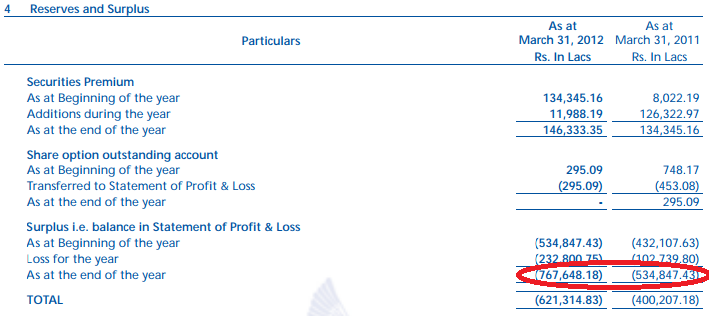
Negative retained earnings appear as a debit balance in the retained earnings account, rather than the credit balance that normally appears for a profitable company. On the company’s balance sheet, negative retained earnings are usually described in a separate line item as an Accumulated Deficit.
portion of stockholders’ equity typically results from accumulated earnings, reduced by net losses and dividends. Like paid-in capital, retained earnings is a source of assets received by a corporation.
You’ll find a line item called retained earnings, or less commonly called accumulated earnings, earnings surplus, or unappropriated profit on a company’s balance sheet under the shareholders’ equity section. If the company is not profitable, net loss for the year is included in the subtractions along with any dividends to the owners. Generally, you will record them on your balance sheet under the equity section. But, you can also record retained earnings on a separate financial statement known as the statement of retained earnings. It is reported on the balance sheet as the cumulative sum of each year’s retained earnings over the life of the business.
Retained earnings are related to net (as opposed to gross) income since it’s the net income amount saved by a company over time. Both revenue and retained earnings are important in evaluating a company’s financial health, what are retained earnings but they highlight different aspects of the financial picture. Revenue sits at the top of theincome statementand is often referred to as the top-line number when describing a company’s financial performance.
What type of account is retained earnings?
Retained Earnings is the collective net income since a company began minus all of the dividends that the company has declared since it began. It is recorded into the Retained Earnings account, which is reported in the Stockholder’s Equity section of the company’s balance sheet.
What Is Retained Earnings On Balance Sheet?
“Retained earnings” is usually the briefest of the mandatory statements, often just a few lines. However, for investors and shareholders, Retained earnings is arguably the most important of the four. It is crucial because Investors hope that stock ownership will reward them either from dividends, or from increases in stock share price, or both. retained earnings balance sheet If the company has bought such hard-to-liquidate assets as buildings and factory equipment with its past profits, it may even face a cash crunch despite a significant retained earnings balance. Never assume that you will receive a dividend in the near future just because the issuing company of your shares has a great deal of retained earnings.

Leave A Comment