
The want for miniaturization of present drilling gear is rising not only within the mineral industry but in addition for NASA to research drilling on Mars. The growth of guided microdrill techniques for the shallow depths of many mineral exploration projects will be challenging.
A few industrial minerals are “surface handled” for particular business functions. To meet market specs in the kaolin and clay industries merchandise are sometimes bleached with a sodium hydrosulfite or similar compound to enhance whiteness or brightness, or ozone is added to oxidize natural substances. Other minerals, such as mica, are surface handled with natural compounds to attain chosen coatings on the mineral. Hydrometallurgical methods are additionally used in the manufacturing of lithium, boron, soda ash, sulfur, and other unique minerals. In common, the economic-minerals trade has very restricted curiosity in hydrometallurgical analysis; its research wants are both specific to a single mineral or are required to attenuate adverse environmental impacts.
What are the 2 main types of mining?
Across the world, mining contributes to erosion, sinkholes, deforestation, loss of biodiversity, significant use of water resources, dammed rivers and ponded waters, wastewater disposal issues, acid mine drainage and contamination of soil, ground and surface water, all of which can lead to health issues in local

Considerably more research and development shall be needed earlier than this space of bioprocessing delivers commercially viable merchandise and processes. A more fruitful method could be to concentrate on developing these applied sciences for environmental control in mining and, when demonstrated efficient for that use, modifying the technology for metallurgical processes.
Baseline climatological, hydrological, and mineralogical knowledge are vital; for example, acid-rock drainage shall be significantly minimized in arid climates the place natural oxidation has already destroyed acid-producing sulfide minerals or the place water flows are negligible. Large drills are used to sink shafts, excavate stopes, and obtain samples for analysis. Lifts carry miners into and out of mines, and transfer mining rock and ore out, and machinery in and out, of underground mines. Huge vehicles, shovels and cranes are employed in floor mining to maneuver large quantities of overburden and ore. Processing vegetation utilize giant crushers, mills, reactors, roasters and different tools to consolidate the mineral-rich materials and extract the specified compounds and metals from the ore.
Some of these metals are thought to be poisonous and hazardous and have to be removed earlier than effluents can be discharged to the setting. Therefore, the event of progressive, environmentally pleasant technologies will be extremely essential. Minimizing waste generation and utilizing wastes to provide helpful by-products whereas maintaining financial viability should be a aim for brand new applied sciences. Hydrometallurgy uses essentially the most sophisticated features of kinetics, answer chemistry, and electrochemistry to understand its full value. Major advances in understanding basic chemistry and bodily phenomena in processing will contribute to improved extraction and separation efficiencies, in addition to minimize environmental impression.
Mineral exploration involves both percussion and rotary drilling that produce rock chips and intact samples of core. The diameter of mineral exploration drill holes (known as slimholes) is generally much smaller than the diameter of either petroleum or geothermal wells. Therefore, most of the down-hole tools used for drilling in the petroleum and geothermal fields are too massive for use in the mineral exploration slimholes.
Almost all mineral exploration entails drilling to find what is beneath the floor. No significant modifications in mineral drilling know-how or techniques have been made for greater than three decades (NRC, 1994b). This contrasts sharply with spectacular advances in drilling technologies, including extremely directional drilling, horizontal drilling, and a wide range of drilling tools for the in-situ measurement of rock properties, for the petroleum and geothermal sectors.
Innovations could possibly be made, nevertheless, with the event of cheap gravity separation methods that could be used to recuperate small portions of heavy minerals from steel-mining flotation tailings. The use of multiforce fields in the separation of particles might improve gravity separation together with different processes. In-situ mining is the “elimination of the valuable parts of a mineral deposit without bodily extraction of the rock” (Bates and Jackson, 1987). In-situ leaching is a type of in-situ mining in which metals or minerals are leached from rocks by aqueous solutions, a hydrometallurgical course of (American Geological Institute, 1997). As used on this report the term in-situ mining contains variations that involve some bodily extraction.
Large-scale autoclaves are used for production of zinc and nickel and to treat refractory gold ores (Mason and Gulyas, 1999). New developments in autoclave technology for pressure leaching a copper focus can also be useful for other mineral techniques.
Mathematical modeling to profile metals and predict optimum efficiency would enhance the overall price of metals recovery. Recently, encouraging results have been obtained utilizing a excessive-decision resistivity approach to survey poorly wetted (nonpenetrated) areas within the heap. In-situ mining aids, corresponding https://topcoinsmarket.io/ to catalysts, surfactants, and wetting agents, may speed up leach kinetics and enhance the permeability of rock surfaces. New lixiviants could be particularly beneficial for maximizing metals extraction from close to-surface deposits utilizing in-situ techniques.
The use of high-stress expertise has been demonstrated for a wide range of commodities in acidic and basic solutions under oxidizing and reducing situations. Because of increased mining reaction charges for each oxidative and reductive processes, strain hydrometallurgy can be an acceptable expertise for the long run.
In addition, sensing, analyzing, and speaking information and data will turn out to be increasingly necessary. Mining environments additionally present unique challenges to the design and operation of equipment.
What are the 3 types of mining?
The three most common types of surface mining are open-pit mining, strip mining, and quarrying. See also mining and coal mining.
Processing
In the sector of geological sciences extra assist for primary science, together with geological mapping and geochemical research, would offer significant although gradual improvements in mineral exploration. Filling gaps in basic data, together with thermodynamic-kinetic information and detailed 4-dimensional geological frameworks of ore techniques, would supply advantages not just for mineral exploration and growth but also for mining and mineral processing.
A mechanism for focusing analysis on crucial points, as recognized by trade, would help focus industrial, governmental, and educational resources on these issues. Underlying bodily and chemical processes of formation are widespread to many metallic and nonmetallic ore deposits. A good deal of knowledge is missing concerning the processes of ore formation, ranging from how metals are released from supply rocks by way of transport to deposition and submit-deposition alteration. Modeling of those processes has been limited by significant gaps in thermodynamic and kinetic knowledge on ore and gangue (waste) minerals, wall-rock minerals, and alteration merchandise.
The geological framework of an ore system includes the three-dimensional distribution of rock varieties and construction, similar to faults and fractures, as well as the fourth dimension of time—how the rocks and constructions fashioned. This framework is important to profitable exploration, efficient mining, and later reclamation. Focused analysis on the development of exploration fashions for “environmentally friendly” ore deposits might yield important results in the brief term.
- In the sphere of geological sciences extra help for primary science, including geological mapping and geochemical analysis, would provide important although gradual enhancements in mineral exploration.
- Focused research on the event of exploration models for “environmentally friendly” ore deposits would possibly yield essential ends in the short term.
- This framework is important to profitable exploration, environment friendly mining, and later reclamation.
- The geological framework of an ore system consists of the three-dimensional distribution of rock varieties and construction, corresponding to faults and fractures, as well as the fourth dimension of time—how the rocks and constructions formed.
- Filling gaps in basic knowledge, including thermodynamic-kinetic information and detailed 4-dimensional geological frameworks of ore techniques, would provide benefits not only for mineral exploration and improvement but additionally for mining and mineral processing.
- A mechanism for focusing research on crucial points, as recognized by industry, would assist focus industrial, governmental, and academic assets on these issues.
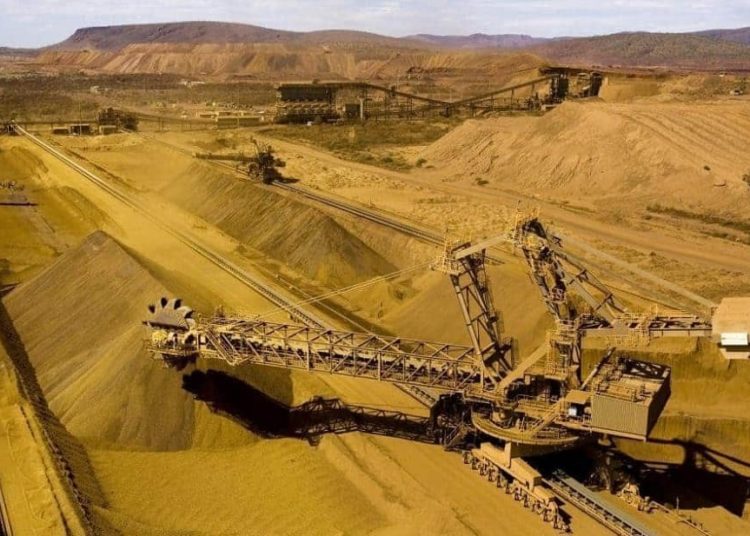
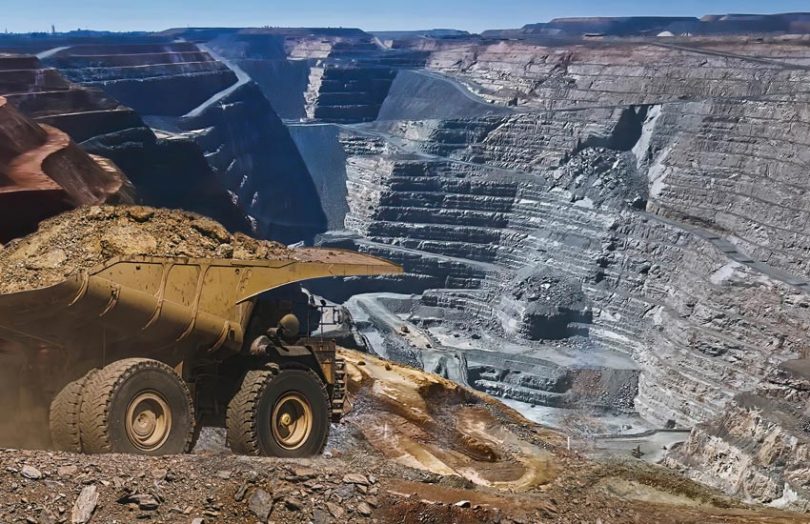
Composed of a lot of complex parts, mining techniques have to be extremely reliable. Therefore, revolutionary upkeep methods, supported by modern monitoring technologies, will be essential for growing the productive operational time of equipment and the mining system as a whole. Surface mining, wherever relevant https://topcoinsmarket.io/cloud-mining/, is extra advantageous than underground mining in terms of ore recovery, operational flexibility, productivity, security, and price. Currently, almost all nonmetallic minerals (greater than ninety five percent), most metallic ores (more than 90 p.c), and a large fraction of coal (greater than 60 percent) are mined by floor methods (Hartman, 1987).

Gravity separation (together with processes that use different forces as adjuncts) just isn’t used a lot in processes for metallic ores because sources of ores amenable to gravity separation are now rare. Innovations continue to be made in gravity separation techniques for metallic minerals, as well as for certain industrial-mineral processes, but mature technologies and machine designs are enough for metallic ores and coarse coal.
Explore the Geosciences
The major components can also be mixed innovatively, such as when in-situ leaching of copper is undertaken after conventional mining has rubblized ore in underground block-caving operations. For example, the inability to establish the conditions forward in the mining face impedes speedy advance and creates health and safety hazards. As mining progresses to larger depths the increase in rock stress requires revolutionary designs for guaranteeing the quick-time period and long-term stability of the mine structure. Truly steady mining will require revolutionary fragmentation and materials-dealing with techniques.
Metal reserves and recycling
The utility of hydrometallurgical methods within the coal trade is even more limited. The coal trade may, nevertheless, be interested within the chemical elimination of mercury or sulfur, or both. Bacteria, fungi, yeast, and algae recuperate and concentrate metals from options utilizing quite a lot of metabolic methods. Most analysis on this space is targeted on utilizing microbial mechanisms for environmental management as opposed to hydrometallurgical processing.
In many cases, significantly in arid environments where rocks are exposed, detailed geologic and alteration mapping has been the important thing issue in the discovery of major copper and gold deposits. The three major parts of mining (exploration, mining, and processing) overlap somewhat. After a mineral deposit has been identified through exploration, the industry should make a substantial investment in mine growth earlier mining than production begins. Further exploration near the deposit and additional development drilling inside the deposit are done whereas the mining is ongoing. In-situ mining, which is treated underneath a separate heading on this chapter, is a special case that mixes elements of mining and processing however doesn’t require the excavation, comminution, and waste disposal steps.
Learn More in these related Britannica articles:
This development could be the continuation of a development that started with dump leaching and heap leaching, solvent extraction/ electrowinning, followed by bioleaching and strain oxidation. Future analysis and development centered on revolutionary reactor designs and supplies, sensors, modeling and simulation, high-stress and biological basics, leaching, and separation reagents are more likely to proceed this development mining. Like other parts of mining, mineral processing might additionally profit from the integration of unit processes for optimum performance, economic advantages, and environmental benefits. Research and development alternatives particular to mineral processing are listed in Table three-4. When useful metals are dissolved in aqueous media, other metals might dissolve as properly.
What are advantages of mining?
Mining techniques can be divided into two common excavation types: surface mining and sub-surface (underground) mining. Today, surface mining is much more common, and produces, for example, 85% of minerals (excluding petroleum and natural gas) in the United States, including 98% of metallic ores.
Mining
What do we mine for?
Mining is the extraction (removal) of minerals and metals from earth. Manganese, tantalum, cassiterite, copper, tin, nickel, bauxite (aluminum ore), iron ore, gold, silver, and diamonds are just some examples of what is mined. Why mine? Mining is a money making business.
These data are critical to an understanding of the geological historical past of ore formation. A geologic database would be useful not only to the mining trade but also to land-use planners and environmental scientists.
What is mining?
The want for characterizations of potential waste rock and surrounding wall rocks, which can both serve as chemical buffers or present fluid pathways for escape to the broader environment. Baseline studies to determine hydrologic conditions and pure occurrences of potentially poisonous components in rocks, soils, and waters are additionally changing into crucial. The baseline information will be vital to figuring out how mining may change hydrologic and geochemical situations.
What are the 4 types of mining?
Mining is the extraction of valuable minerals or other geological materials from the Earth, usually from an ore body, lode, vein, seam, reef or placer deposit. These deposits form a mineralized package that is of economic interest to the miner.
Processing of placer ore material consists of gravity-dependent methods of separation, corresponding to sluice boxes. Only minor shaking or washing could also be necessary to disaggregate (unclump) the sands or gravels before processing. Processing of ore from a lode mine, whether or not it is a floor or subsurface mine, requires that the rock ore be crushed and pulverized earlier than extraction of the dear minerals begins. After lode ore is crushed, recovery of the dear minerals is completed by one, or a combination of several, mechanical and chemical strategies. The most essential change within the mineral industry within the next 20 years could be the complete alternative of smelting by the hydrometallurgical processing of base metals.
What is mining in simple words?
Mining is the process of digging things out of the ground. Any material that cannot be grown must be mined. Mining things from the ground is called extraction. Mining can include extraction of metals and minerals, like coal, diamond, gold, silver, platinum, copper, tin and iron.
However, as floor mineral deposits are exhausted, underground mining will inevitably turn into extra prevalent. In addition, as more simply minable deposits are depleted, mining expertise and tools and mining techniques for extracting problematic deposits should be developed. The focus of research on geological ore deposits has modified with new mineral discoveries and with swings in commodity prices. Geoscientists have developed numerous fashions of ore deposits (Cox and Singer, 1992). Models for ore deposits that, when mined, have minimal impacts on the surroundings (corresponding to deposits with no acid-generating capability) and for deposits which may be amenable to revolutionary in-situ extraction will be important for the long run.

Leave A Comment